Rotorua · Waitangi · Taupō
Māori Experiences in New Zealand
Four Rotorua villages sold as if they were the same evening at different prices. They are not. One is a show, one is premium theatre, one is a place people actually live — and no village's own website can tell you which suits you.
Four Villages, Four Different Evenings
Which Māori Experience?
They are not versions of the same night out. Start with what you actually want.
Mitai
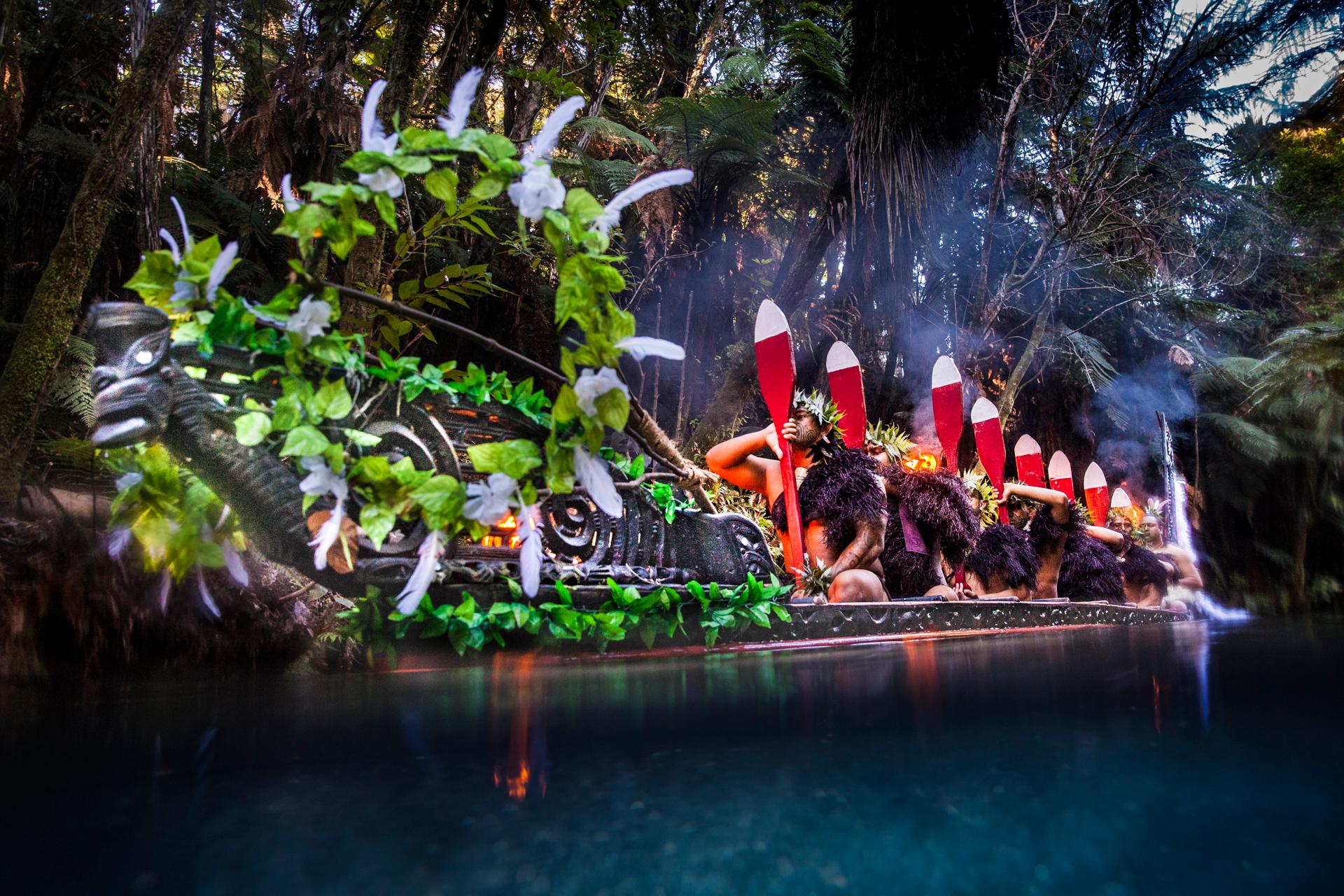
The evening most people mean when they say Māori experience: warriors arriving by waka, a concert, and a hangi lifted from the ground in front of you.
From $101 · 4,119 reviews →
PREMIUMTe Pā Tū
The higher-priced, more theatrical evening — a forest setting, four-course hangi menu, and the most polished production of the group.
From $167 · 1,429 reviews →
PEOPLE LIVE HEREWhakarewarewa
Not a show village. A geothermal settlement families have lived in for generations, where the hot pools are still used for cooking and bathing.
From $29 · 382 reviews →
GEYSER + CULTURETe Puia
The Pōhutu geyser, the national carving and weaving schools, and a cultural performance — the institution rather than the evening out.
From $227 · 300 reviews →
The Honest Comparison
What No Single Village Will Tell You
Start With What You Want, Not the Price
The four Rotorua options are sold as if they were the same evening at different price points. They are not.
Mitai — $101. The one most people mean. Warriors arrive by waka down the stream, there is a concert in a covered space, and the hangi is lifted out of the ground in front of you. 4,119 reviews at 4.7 — by a wide margin the deepest record of any Māori experience in the country, which matters in a category where the marketing photos all look alike. Mitai .
Te Pā Tū — $167. The premium version: forest setting after dark, a four-course hangi-based menu, the most theatrical production of the group. 1,429 reviews at 4.8. Worth the gap if you want the evening to be the event rather than an activity. Te Pā Tū .
Whakarewarewa — $29. The one that is different in kind rather than degree. People live here. It is a geothermal village where families still cook in the hot pools and bathe in them, and the tour is a walk through a working settlement rather than an evening show. Cheapest by far, and the only one where the word “authentic” means something specific. Whakarewarewa .
Te Puia — from $227 in combination. The institution: the Pōhutu geyser, the national carving and weaving schools, and a cultural performance. More museum than evening out. Te Puia .
The Comparison Nobody Selling Tickets Can Write
This is worth stating plainly, because it explains why a page like this exists.
Te Puia cannot tell you Mitai is better value for an evening. Mitai cannot tell you Whakarewarewa is a village people actually live in. Each village’s own site can only argue for itself — that is not dishonesty, it is what a business site is for.
The comparison is the thing visitors actually want and the one thing no venue can supply. That is what which village to choose is.
The Split That Actually Decides It
| If you want | Book |
|---|---|
| The classic evening, deepest reviews | Mitai, $101 |
| The premium, most theatrical version | Te Pā Tū, $167 |
| A village people live in, by daylight | Whakarewarewa, $29 |
| Geysers and the carving school | Te Puia |
| One evening only, no strong view | Mitai |
| Two experiences | Whakarewarewa by day, Mitai at night |
The last row is the one we would actually recommend. Whakarewarewa and an evening village are not competing purchases — they answer different questions, and doing both gives you the daytime reality and the formal welcome.
A Word on What These Are
These are living communities, and in some cases a working marae. A pōwhiri is a formal welcome with protocol attached, not a warm-up act. A hangi is a meal cooked in an earth oven over hours — the lifting of it is genuinely the centrepiece, not theatre. What a hangi actually is .
Visitors who go in understanding that consistently report a better evening than those expecting a dinner show, and the review records bear that out.
Beyond Rotorua
Rotorua dominates, but it is not the whole picture. Waitangi Treaty Grounds in Northland is where the founding document of New Zealand was signed and carries a different weight entirely. Taupō has Māori rock carvings reachable only by boat or kayak — a genuinely different experience from a village evening.
Most visitors arrive from somewhere else: from Auckland covers the day trips, including the cruise-ship route from Tauranga.
Prices and review counts on this site are read from the booking platform and move.
Māori Experiences — Questions
Which village, what a hangi is, and what to expect from a pōwhiri.
Mitai for the classic evening, Te Pā Tū for the premium version, Whakarewarewa if you want a village people actually live in. Mitai carries 4,119 reviews at 4.7 — far the deepest record in the category — and is the safe answer if you have one evening and no strong preference. Te Pā Tū at $167 is more theatrical and more expensive. Whakarewarewa at $29 is a daytime walk through a working geothermal settlement rather than an evening show, and it is different in kind rather than degree. Full comparison on which village.
Mitai is the classic evening at $101; Te Pā Tū is the premium, more theatrical one at $167. Mitai opens with warriors arriving by waka on the stream and runs a concert plus the hangi lifting, and its 4,119 reviews make it the most-booked by a wide margin. Te Pā Tū stages the evening in forest after dark with a four-course hangi-based menu and the most polished production of the group. Neither is a lesser version of the other; the gap buys atmosphere and food, not more culture.
Fundamentally, yes — people live there. Whakarewarewa is a geothermal village where families have lived for generations and still cook in the hot pools and bathe in them. The visit is a guided daytime walk through a working settlement, not an evening performance, and at $29 it is much the cheapest of the four. If the word 'authentic' is doing work in your decision, this is the one it applies to most literally. It also pairs well with an evening village rather than competing with one.
A meal cooked in an earth oven — food lowered into a pit over heated stones, covered, and left to steam for hours. Meat, kūmara and other vegetables come out smoky and very tender. At the village evenings the lifting of the hangi is the centrepiece rather than a garnish, and it is genuinely the food you eat that night, not a demonstration. It is worth understanding before you go, because 'dinner included' undersells what is actually happening. More on what a hangi is.
A formal welcome ceremony with real protocol, not a warm-up act. It establishes the relationship between hosts and visitors and follows a set sequence, including a challenge, speeches and often song. Guests are usually asked to select a chief for the group and to follow instructions about when to move and when to stay silent. Treating it as a performance to talk through is the single most common way visitors give offence, and the villages are consistently gracious about explaining it beforehand.
From $29 for the Whakarewarewa village walk up to $167 for the premium evening, with day trips from Auckland running higher. The evening experiences include a hangi dinner and transport is often included from Rotorua accommodation, which closes much of the apparent gap against the daytime village. Day trips from Auckland or Tauranga cost considerably more because they are buying you a long coach day as well as the experience itself.
Yes — Rotorua is about three hours each way and the packaged day trips run from around $185. They are long days and usually bundle the village with something else, often a geothermal park. If you are staying in Auckland and will not otherwise reach Rotorua, they are a reasonable way to see it; if you are spending a night in Rotorua anyway, book the village locally and save the coach time. Cruise passengers arriving at Tauranga have their own shorter route at about $217. See from Auckland.
The evening villages are commercial experiences, and they do not pretend otherwise — but the culture in them is real and the people running them are the community it belongs to. The performances are staged; the whakapapa, the protocol and the food are not inventions. Visitors who arrive expecting either a sacred private ceremony or a cynical dinner show both come away with the wrong impression. Whakarewarewa is the least staged of the four because it is a place people live rather than a venue.
If you have the time, Whakarewarewa by day and an evening village is the pairing that works. They answer different questions — one shows you how a geothermal community actually functions, the other gives you the formal welcome, the performance and the hangi. Doing two evening villages is a repeat; doing the daytime village and an evening one is not. Two evenings in Rotorua is more Rotorua than most itineraries have.
Waitangi Treaty Grounds in Northland and the Taupō rock carvings are the two that are genuinely different, not just further away. Waitangi is where New Zealand's founding document was signed and carries historical weight no village evening does. The Taupō carvings are modern Māori rock art on the lake shore, reachable only by boat or kayak. Rotorua has the concentration of village experiences, but it does not have a monopoly on the subject.
Still have questions? Email us at info@maoriexperiencenz.com
Browse Every Māori Experience
All 7 experiences we track, with real prices and review counts.